Introduction
Asana is a leading work management platform designed to help teams organize, track, and manage their work. From daily tasks to strategic initiatives, Asana provides a centralized space for distributed and remote teams to collaborate effectively, ensuring everyone is aligned and productive from anywhere in the world.
Key Features
Asana offers a robust suite of features to streamline project management:
- Task & Project Management: Create tasks, assign owners, set due dates, and organize work into shared projects with customizable lists, boards, or timelines.
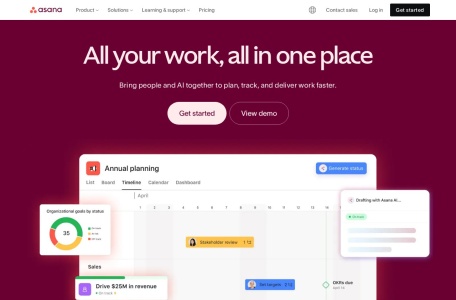
- Visual Timelines (Gantt Charts): Plan and visualize project schedules, dependencies, and critical paths to ensure on-time delivery.
- Automated Workflows: Reduce manual work by creating rules to automatically assign tasks, adjust due dates, or set status updates.
- Goal Tracking: Connect daily work to company objectives by setting, tracking, and measuring progress towards goals.
- Multiple Views: View work in the way that suits you best: List, Board, Calendar, or Timeline view.
Unique Advantages
What sets Asana apart in the competitive work management landscape?
- Intuitive User Interface: Its clean and user-friendly design minimizes the learning curve, encouraging rapid team adoption.
- Focus on Clarity & Accountability: Every piece of work has a clear owner and deadline, eliminating confusion about who is doing what and by when.
- Seamless Integrations: Asana connects with the tools teams already use, such as Slack, Google Drive, Microsoft Teams, and Zoom, creating a unified work hub.
- Scalability: It is equally effective for small team task lists and large-scale, cross-functional enterprise projects.
Who Should Use Asana?
Asana is versatile and benefits a wide range of users and teams, including:
- Project Managers & Coordinators: For planning, resource allocation, and tracking complex project lifecycles.
- Marketing & Creative Teams: To manage campaigns, content calendars, and creative reviews from ideation to launch.
- Remote & Hybrid Teams: To maintain transparency and seamless collaboration across different locations and time zones.
- IT & Operations Teams: For tracking sprints, managing requests, and streamlining internal processes.
- Executives & Leaders: To gain a high-level overview of strategic goal progress and team workload.
Frequently Asked Questions
Is Asana suitable for personal task management?
Yes, individuals can use Asana’s free tier to manage personal projects and to-do lists effectively.
How does Asana ensure data security?
Asana employs enterprise-grade security measures, including data encryption, regular audits, and compliance with standards like GDPR and SOC 2.
Can I try Asana for free?
Absolutely. Asana offers a robust free plan for individuals and small teams to get started, with premium plans unlocking advanced features.
Does Asana support agile methodologies?
Yes, with features like Boards, timelines, and custom fields, teams can easily adapt Asana to support Scrum, Kanban, and other agile frameworks.
data statistics
Relevant Navigation


Tray.ai: AI for business automation

Make

Airtable: AI App Building for Enterprise

monday.com